
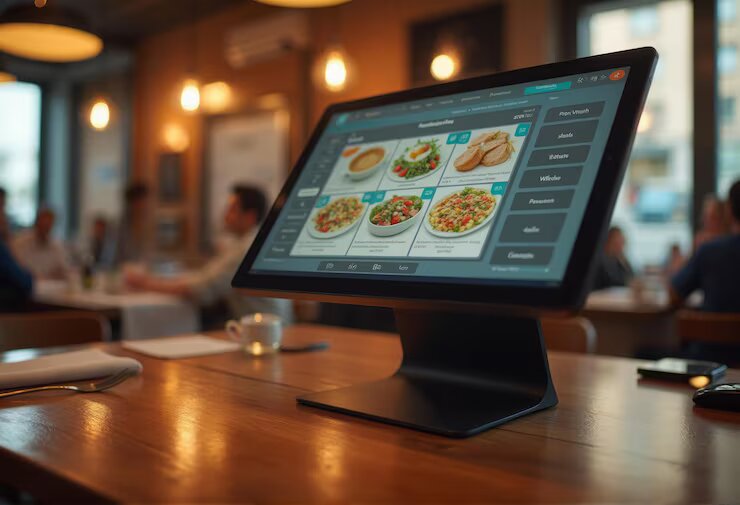
An internet outage should never stop a business. For a point of sale, continuity is both a revenue issue and a customer trust issue.
1. Offline mode protects peak-hour sales
Even with a good connection, incidents happen. Offline mode lets teams keep taking orders and payments.
The key is not just working offline, but syncing cleanly afterward.
- Sales continuity
- Orders stored locally
- Less stress for the team
- Clean recovery after reconnection
2. Cloud gives managers remote visibility
Cloud access lets owners track sales without being on site.
This is especially valuable for franchises, groups and businesses with multiple locations.
- Remote dashboards
- Multi-location comparison
- Centralized reports and exports
- Secure role-based access
3. Hardware must match operations
Good POS performance also depends on tablets, printers, scanners and local network quality.
Before going live, test the full flow: order, payment, printing, void, closing and sync.
- Receipt and kitchen printers
- Cash drawer and barcode scanners
- Adapted tablets or screens
- Real operating tests
4. Choose between simple POS and full platform
For low volume, a simple POS may be enough. For stock, loyalty, reviews and multi-site control, an expandable platform becomes more profitable.
The right choice depends on your management ambition, not only monthly price.
- Start with essential needs
- Check user and module limits
- Plan for growth
- Compare total cost over 12 months
Frequently asked questions
Can cloud POS work without internet?
+
Yes, if offline mode is built in. Operations are stored locally and synchronized when the connection returns.
Is cloud useful for one location?
+
Yes. It enables remote monitoring, safer data and future growth.
What should be tested before launch?
+
Test payments, printing, voids, closing, sync and outage scenarios.